This is our monthly read on the markets Villa Andina works in: Peruvian dried fruit, cacao, superfoods and Andean grains. It combines Peru's customs data (SUNAT, via Veritrade), our own field reports from the growing regions, and the global market backdrop. August's edition is dominated by one story, the mango chill window, and one turning point, cocoa's rebound into the new West African season.
Mango: the chill window has closed on the 2026/27 campaign
Following our July temperature report from Piura, the picture has firmed, and not in the right direction. July was Piura's hottest winter in more than 50 years, with a 34.2°C record and night minimums running 6 to 7°C above normal, so the chill window closed with essentially no cold nights. Independent field estimates now put flowering near 10% in Piura, with 2026/27 projections of roughly 77,000 to 85,000 tonnes against 223,000 to 245,800 tonnes last season (FreshFruitPortal, Fruitnet). That lands at the severe end of the scenarios we outlined in July. ENFEN's comunicado N° 14, due mid-August, will tell us whether the event stays strong or escalates further.
Our own collection zones tell a somewhat better story. In the highland valleys we work with, flowering is around 70% with roughly a 20% impact so far, and the Edward and Haden varieties are resisting the heat better than Kent. Suppliers expect a slow start at about 5 to 10 tonnes of fresh fruit per week into early September, with fruit uneven in growth and ripening. Farmgate prices will be reviewed in the first week of September; as always at origin, fruit trades spot and real offers only appear once the crop shows itself.
Here is how Peru's dried mango exports have trended by harvest year:
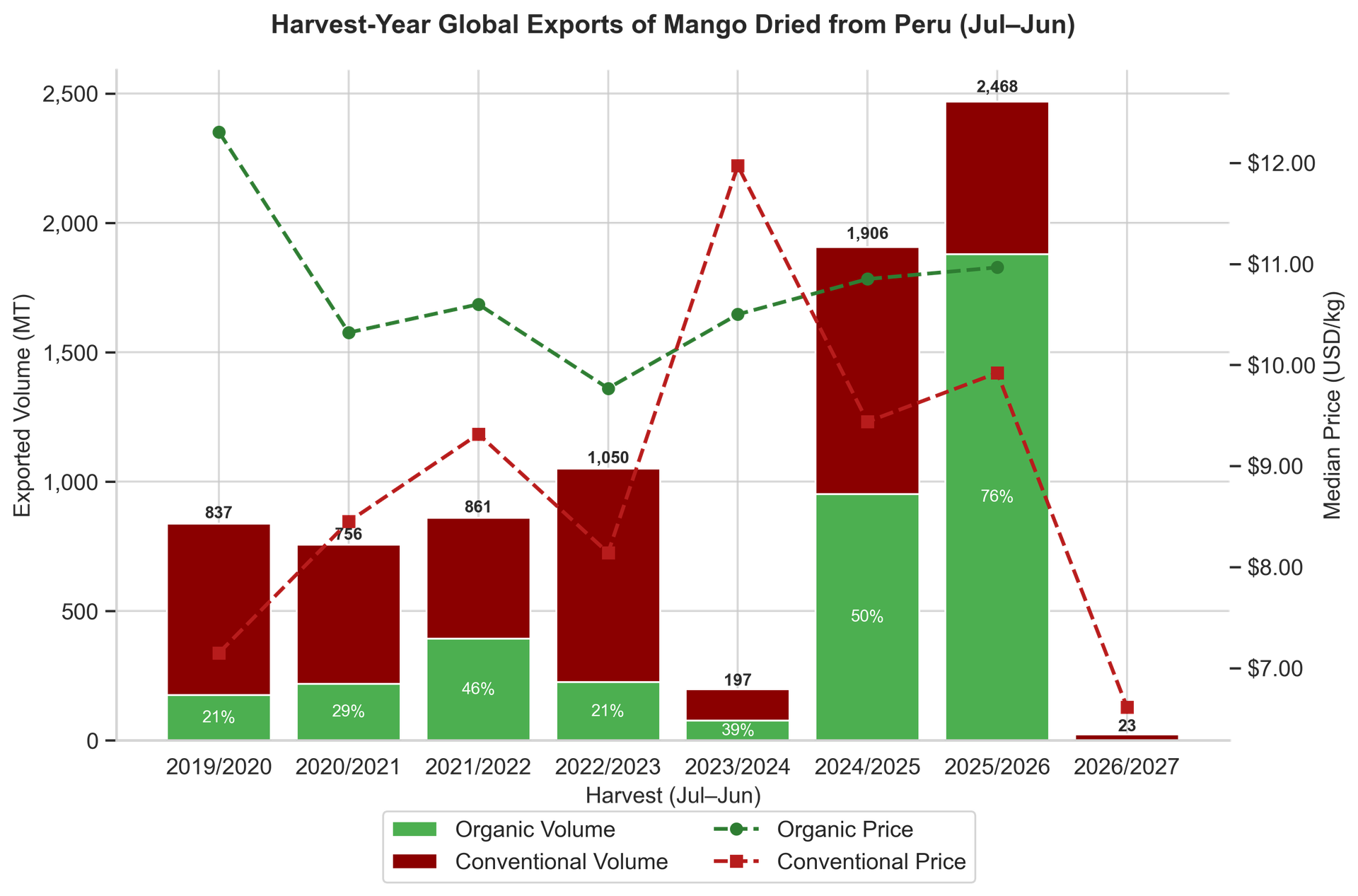
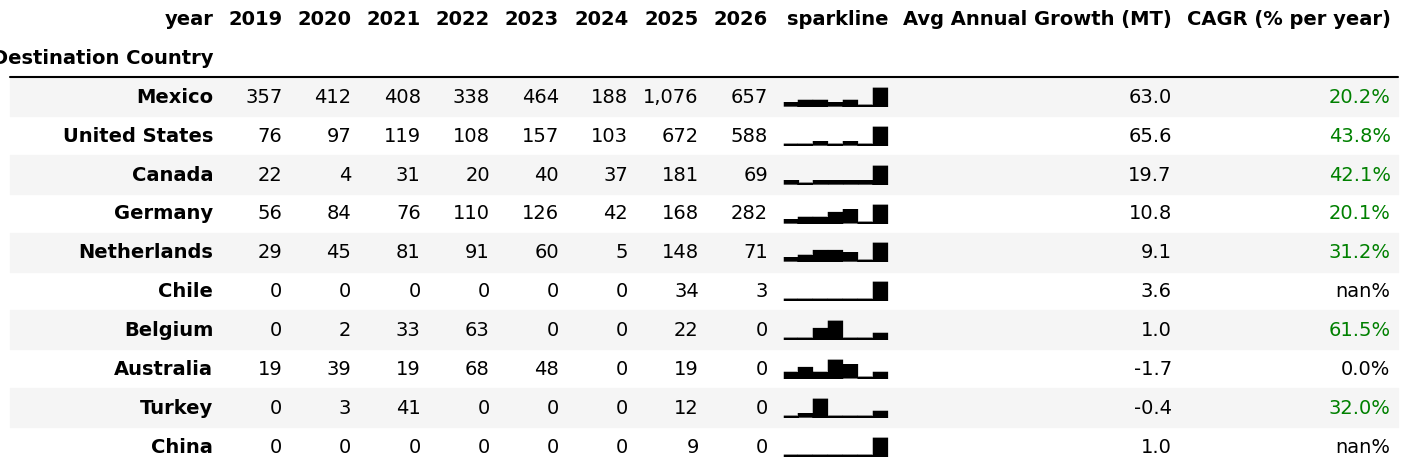
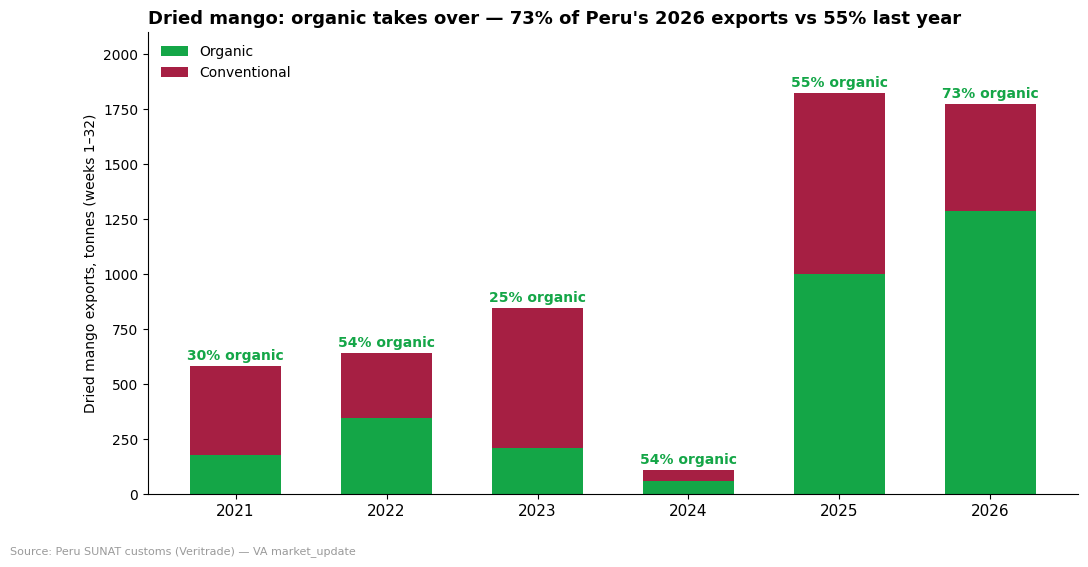
One structural shift worth noting: organic took 73% of Peru's 2026 dried mango exports, up from 55% last year.
Cocoa: shipping below the screen, with the new season four weeks away
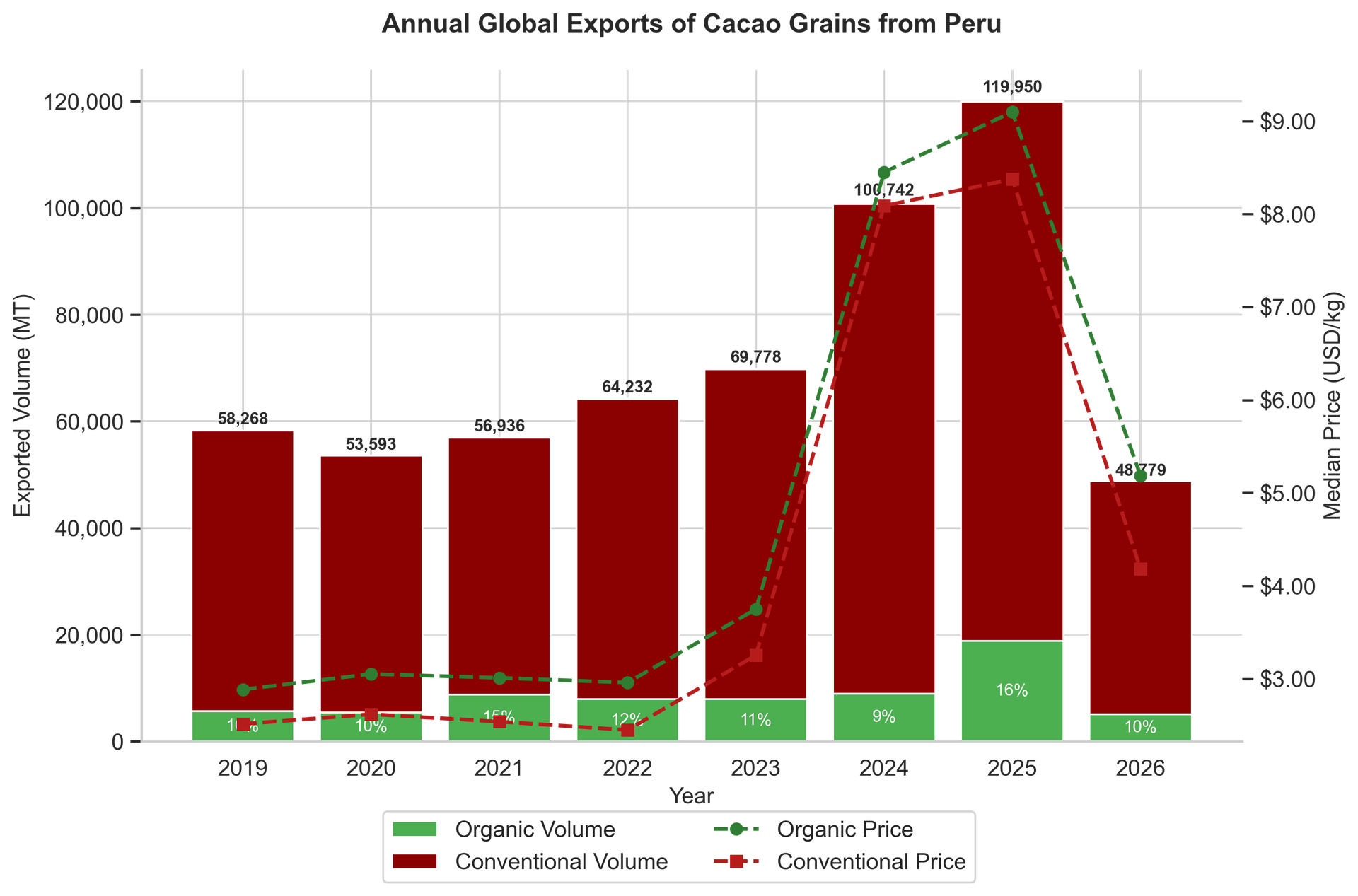
ICE cocoa is trading near US$5,700/MT, still down about a third from last year's highs but up roughly 40% over three months, after briefly jumping above US$6,000 in early August when Ghana projected an output decline of at least 16% for 2026/27 (CNBC Africa) and early Côte d'Ivoire surveys pointed more than 10% lower. Positioning adds fuel: speculative length is near a one-year low while global grindings are improving, with Asia up 25% year on year in Q2 even as Europe fell 4.6% (CocoaIntel). That is the kind of setup where supply news travels fast.
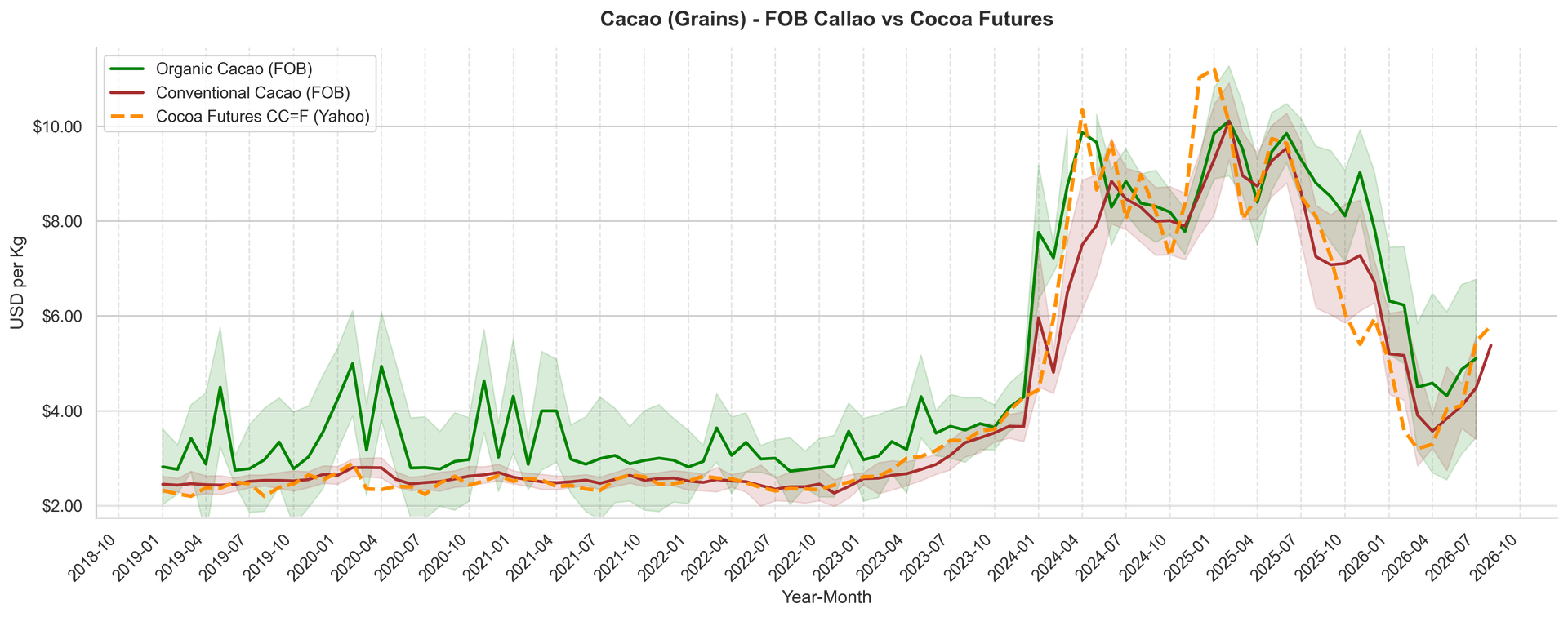
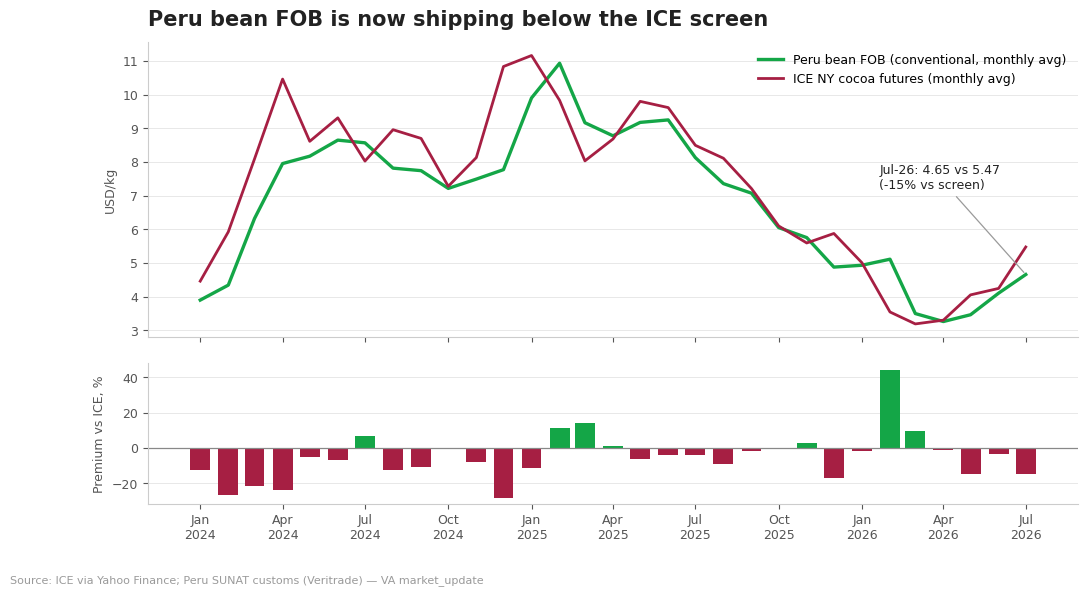
At origin, Peru's main harvest closed in July and organic beans in particular are scarce and being bid up. Peru's average bean export price is down 57% year to date (FreshFruit), and Peruvian FOB is currently shipping below the ICE screen, a gap we expect to close as origin quotes catch up with the board. With the new West African season starting September 1 and EUDR compliance landing December 30 for larger EU operators, we see a reasonable case for covering Q4 and Q1 needs now.
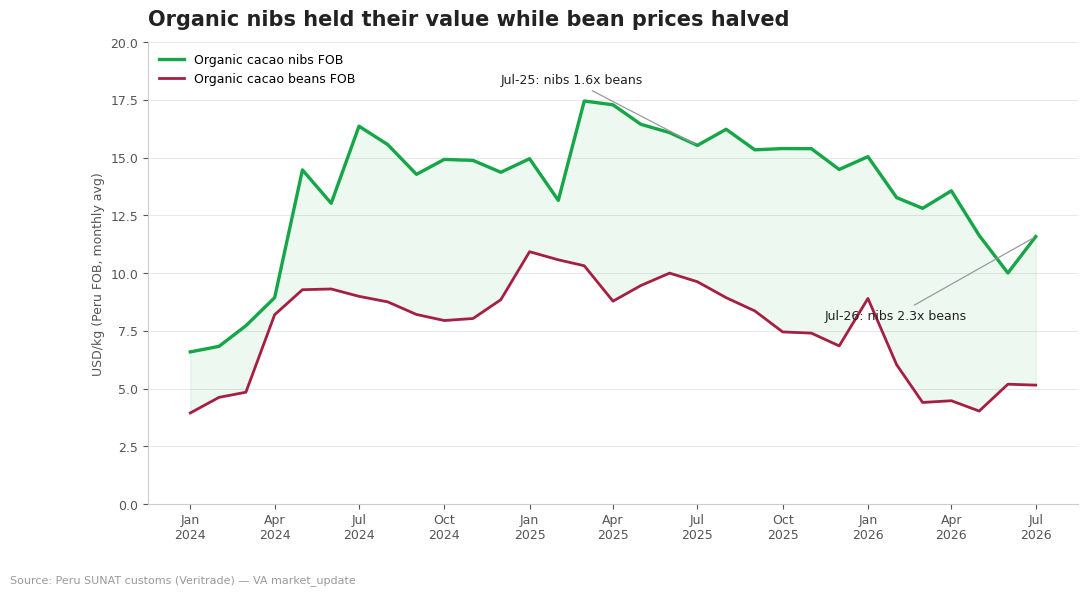
Nibs held their value while beans halved
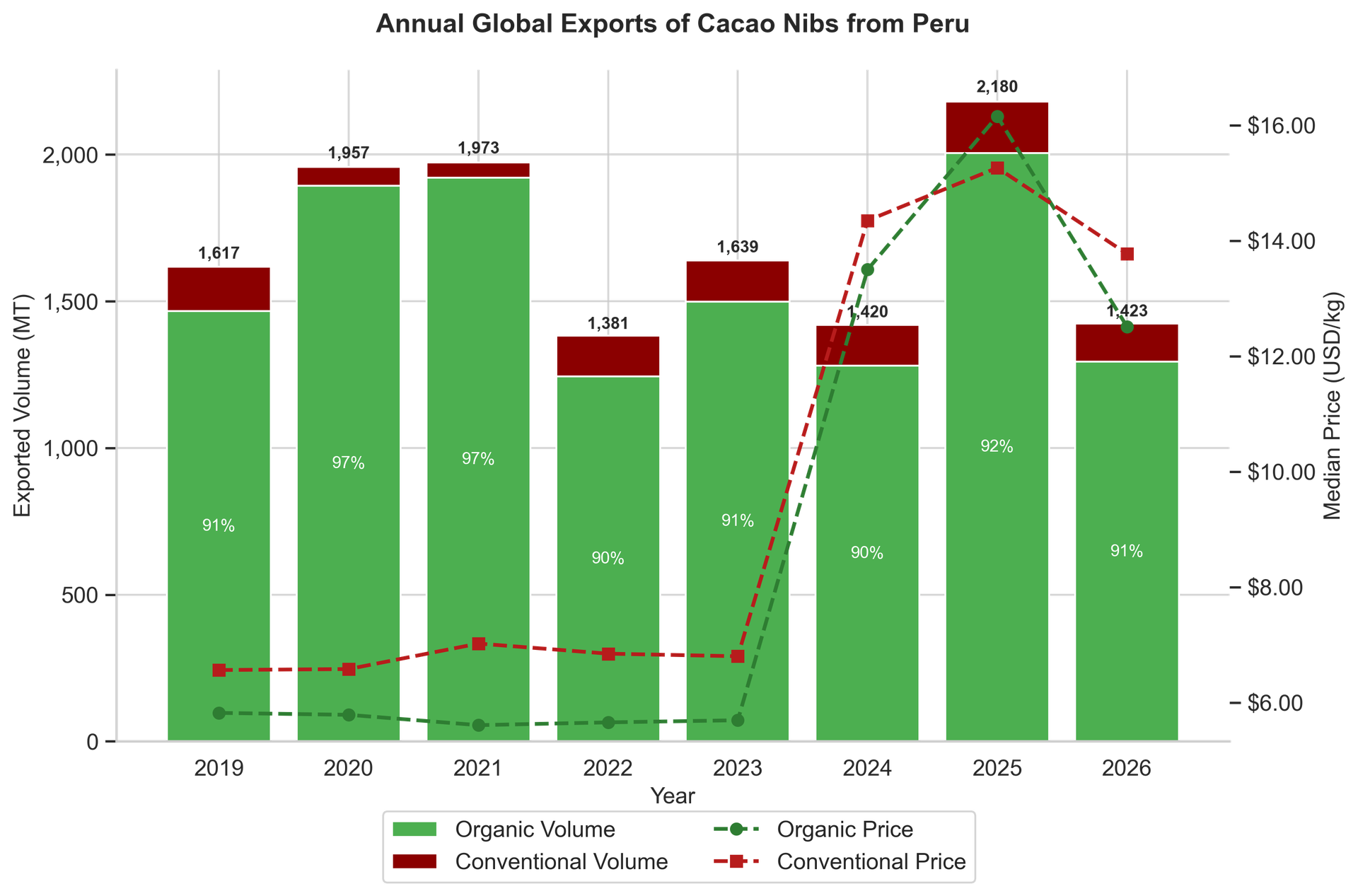
While Peru's organic bean FOB halved over the past year, organic nibs eased only about 25%, and the nibs-to-bean price multiple widened from 1.6x to 2.3x. Demand is at a record: Peru shipped roughly 1,290 tonnes of organic nibs through early August, up 29% on last year.
Derivatives corrected hard
Peruvian butter export prices are down about 51% year on year even as butter volumes grew, and paste and powder followed. Peru keeps moving up the value chain, exporting more origin-processed cacao and fewer raw beans. Our cacao line covers beans, nibs, paste, butter and powder, all organic and identity preserved.
Superfoods
Maca: a smaller harvest, for an unexpected reason
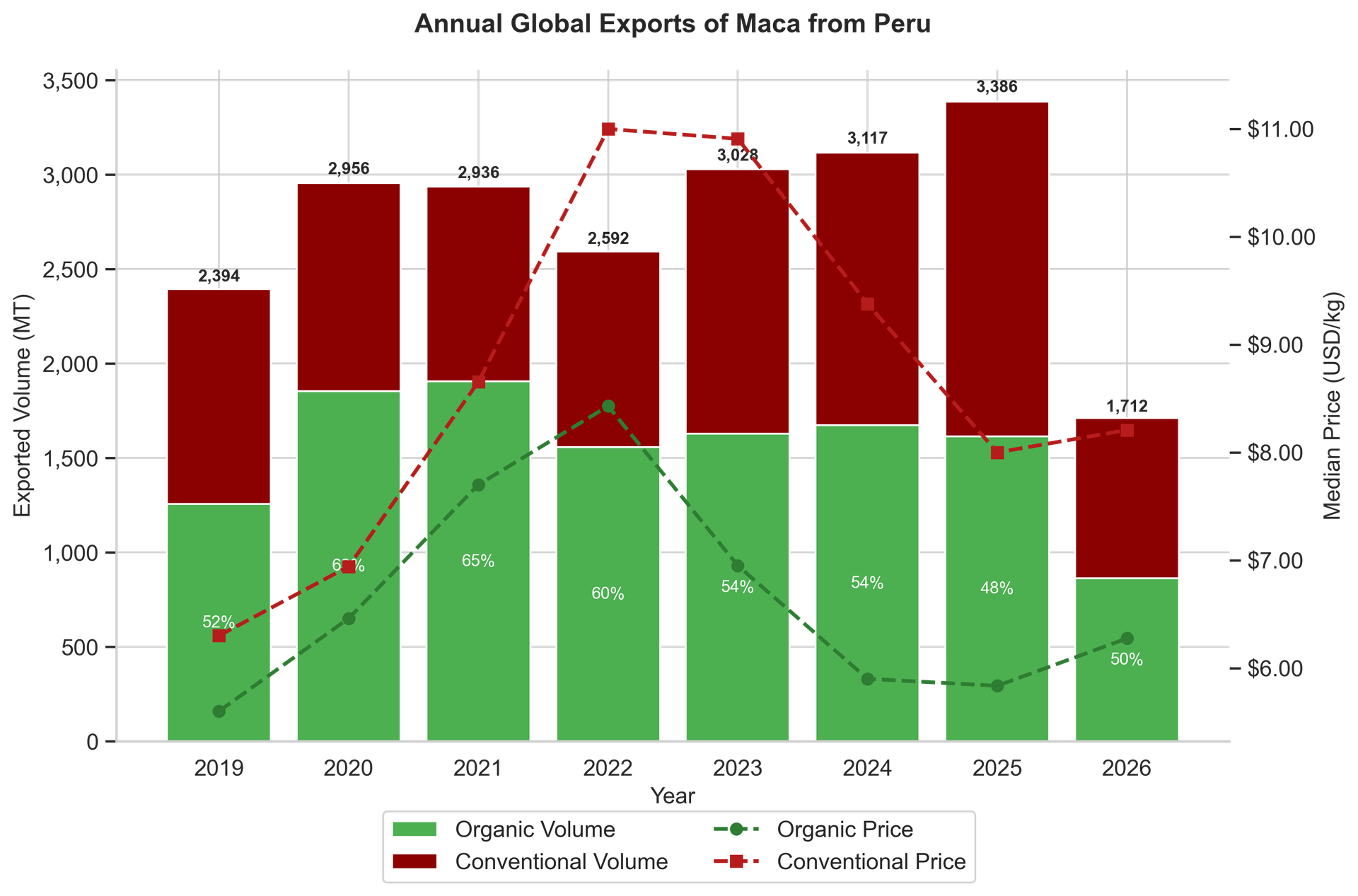
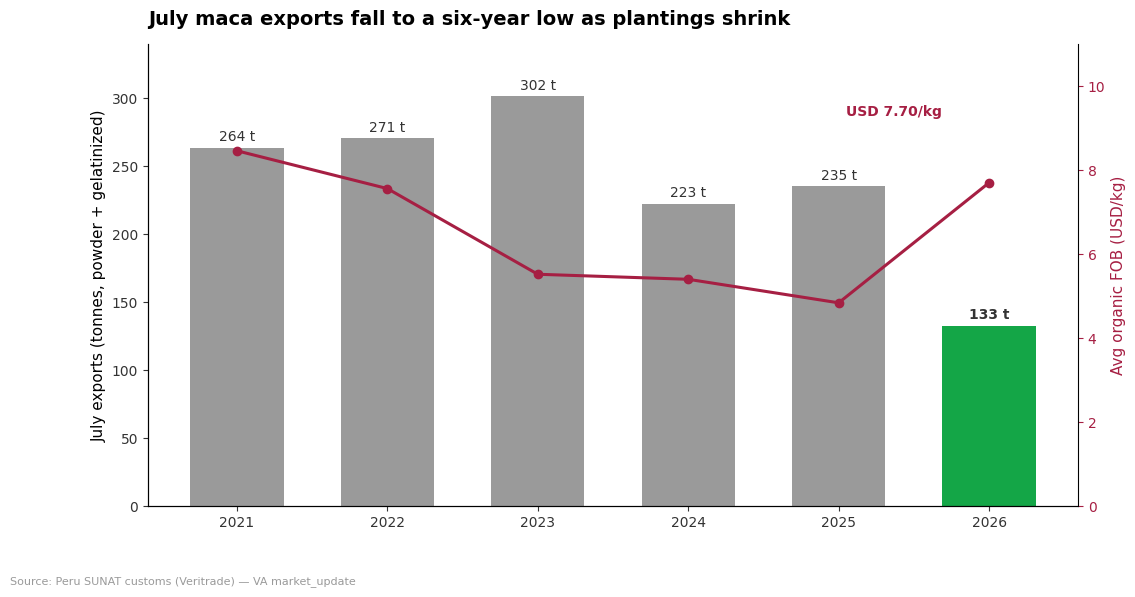
The 2026 harvest now coming in from Junín and Pasco is smaller than in previous years. This is not frost damage; the June and July cold waves largely spared the maca fields. Growers simply planted less after several campaigns where prices did not cover rising costs, and carryover stocks from 2025 are nearly gone (OrganicCrops). Peru's July exports of maca powder fell to a six-year low. Dried maca from the new harvest comes out in September and October and demand at origin is firm, so we recommend securing volumes for the rest of the year early.
Lucuma: flowing into pulp and fresh
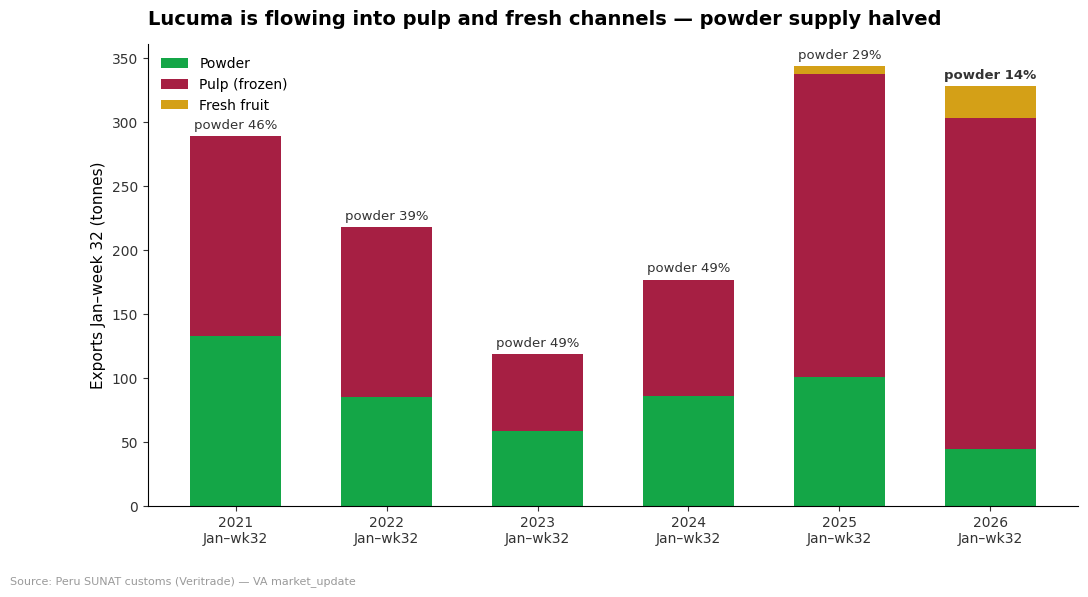
Peru's lucuma is increasingly flowing into frozen pulp and fresh channels; national powder output through July is roughly half of last year's, while powder prices firm modestly. The new coastal harvest starts in October (Portal Frutícola).
Camu camu: stable after a complicated season
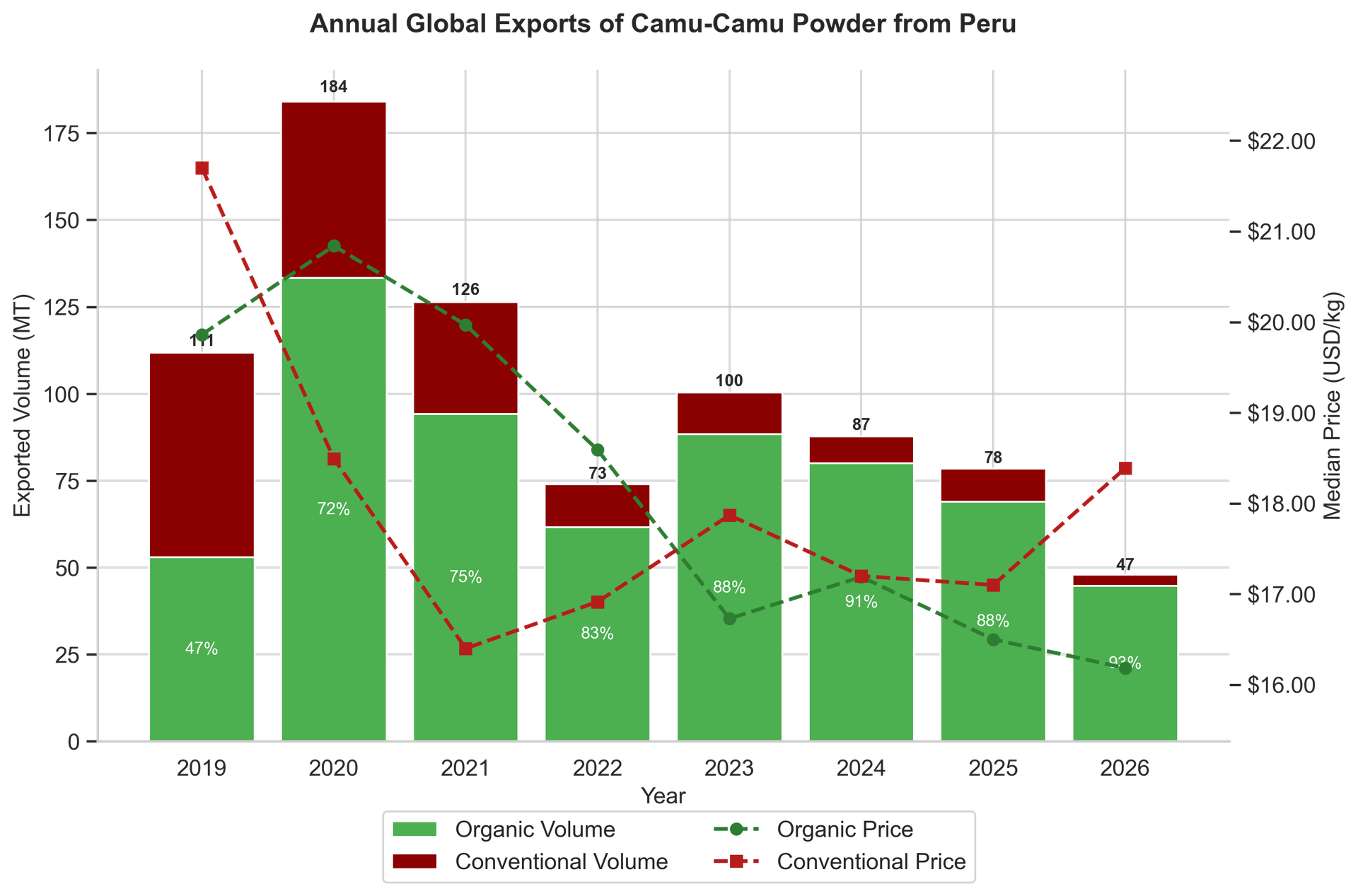
Raw material prices are holding stable after a collection season complicated by unusually high Amazon river levels. Demand remains anchored by Japan and the US.
Dried Fruits
Banana: TR4 pushes production south, organic supply in deficit
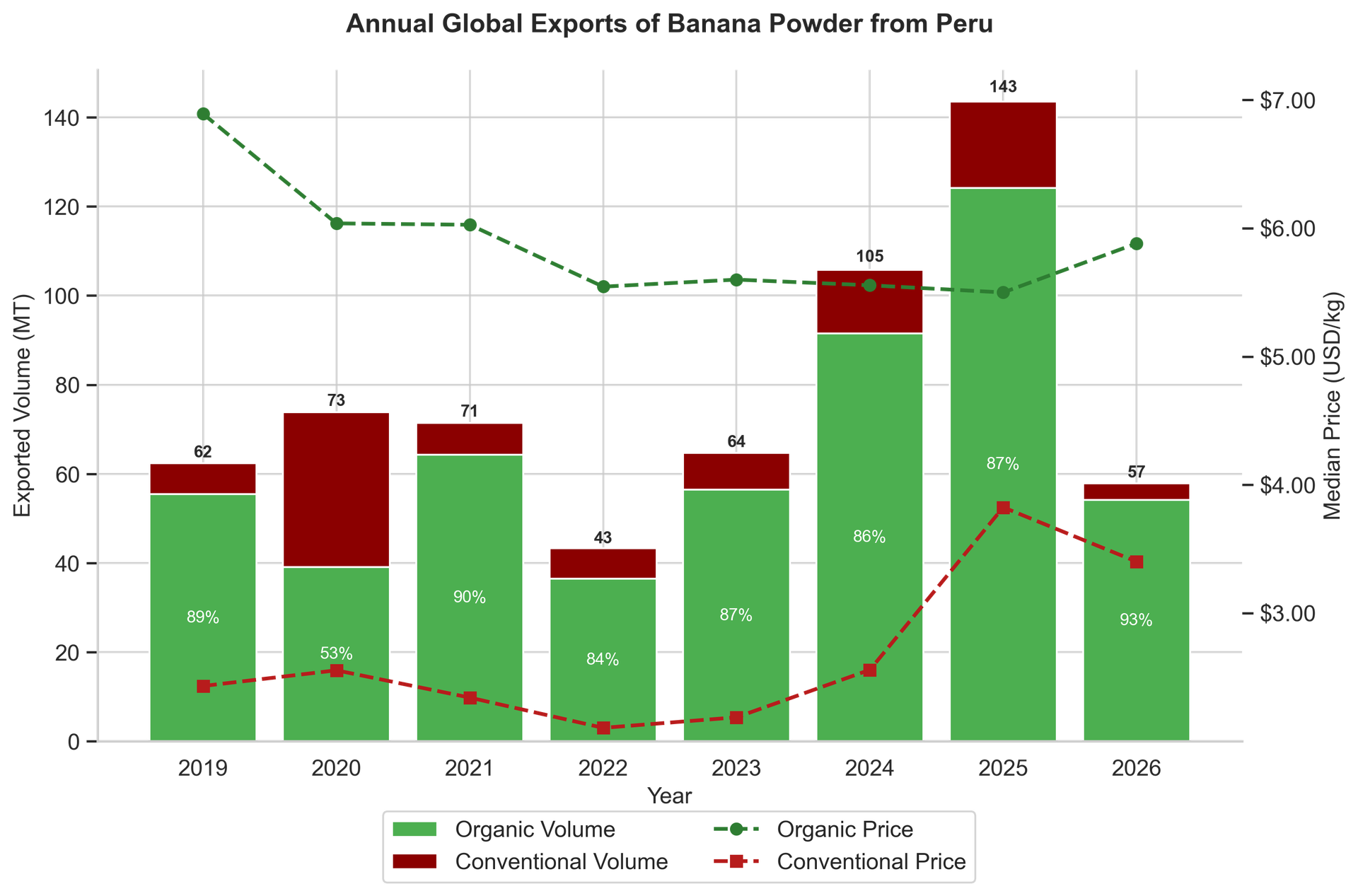
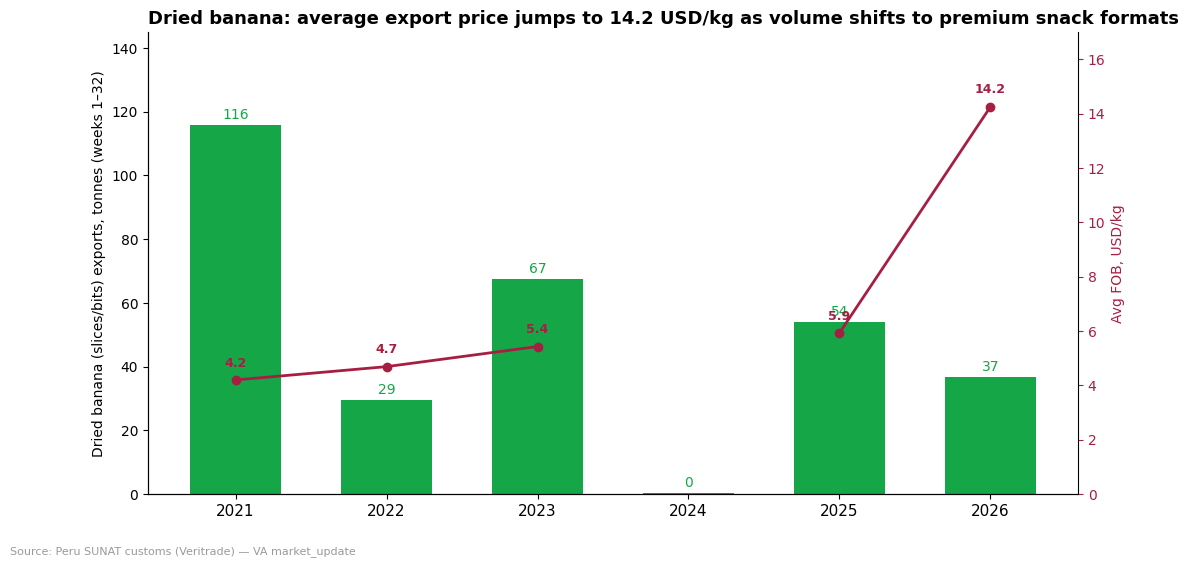
Peru's organic banana sector continues adjusting to Fusarium TR4, the soil-borne fungus that has hollowed out production in the Chira Valley and pushed new plantings south toward Olmos (FreshPlaza). With global organic banana supply in deficit, international prices for Peruvian organic fruit have risen from about 0.91 to 1.06 USD/kg over the past year (FreshPlaza). In our own collection zone the impact remains moderate. On the demand side, Peru's dried banana export mix keeps moving toward premium snack formats, with the national average export price jumping to about 14.2 USD/kg this year on high-value retail-grade flows.
Goldenberry: the fresh channel sets the tone
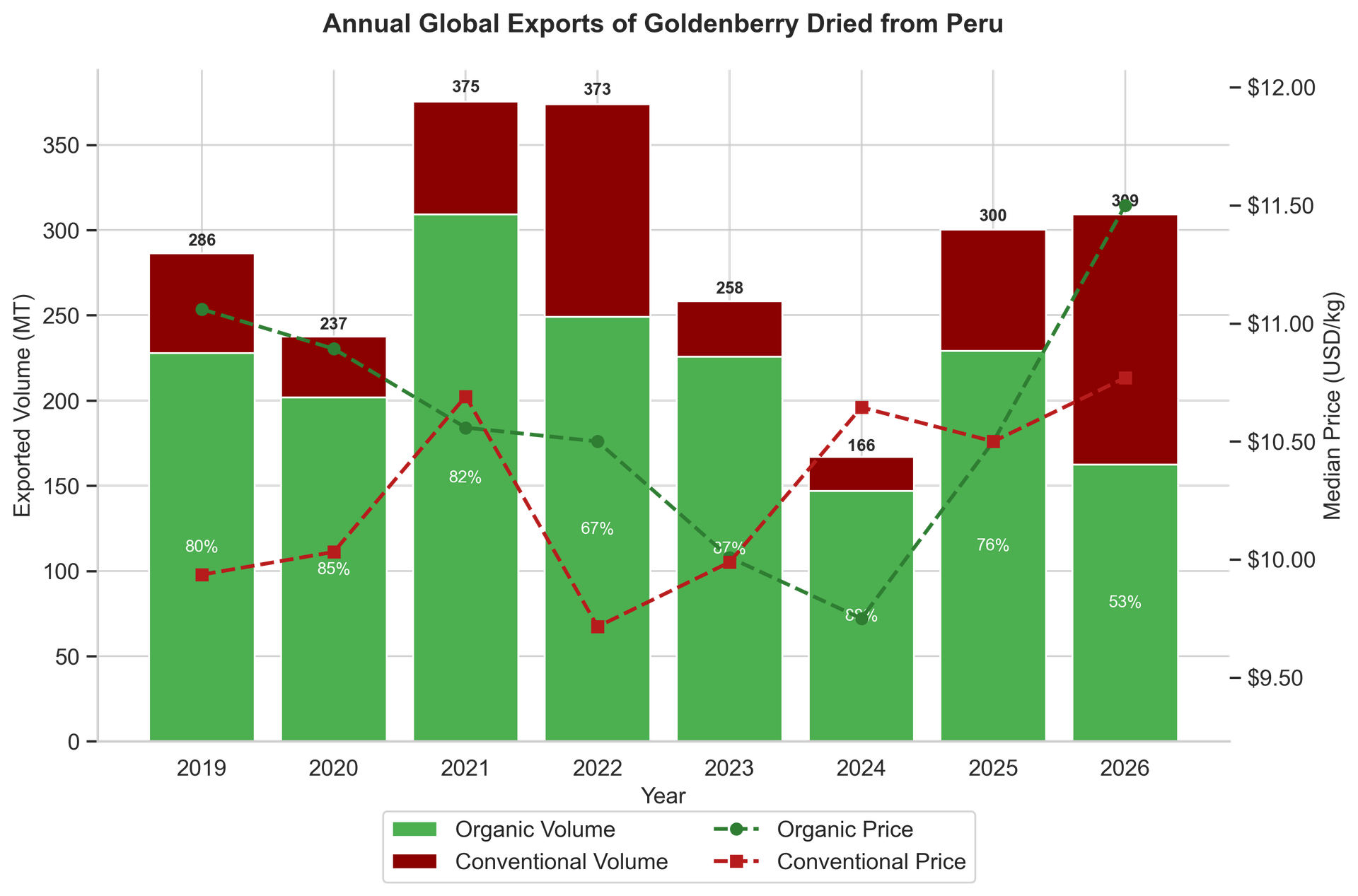
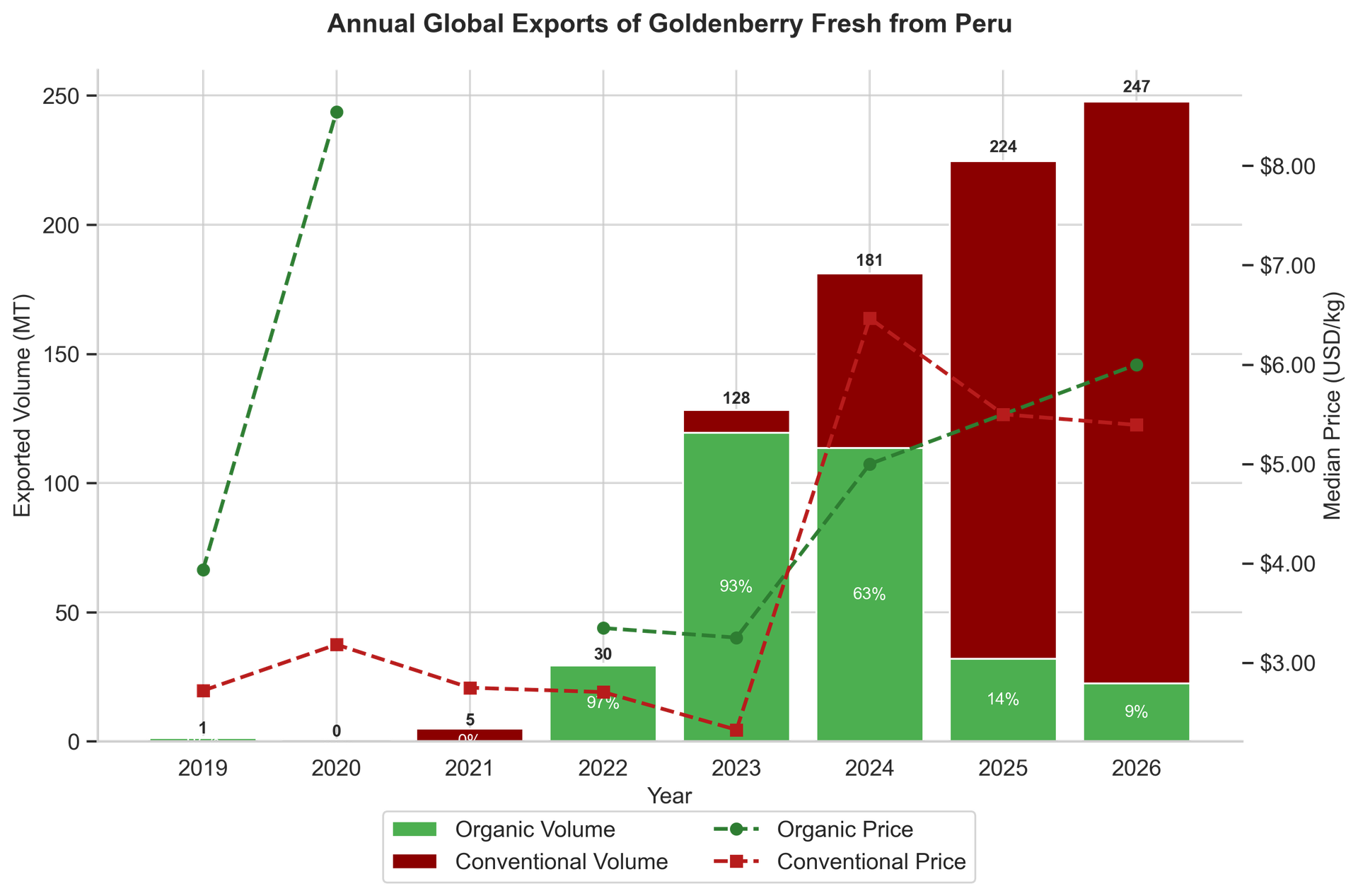
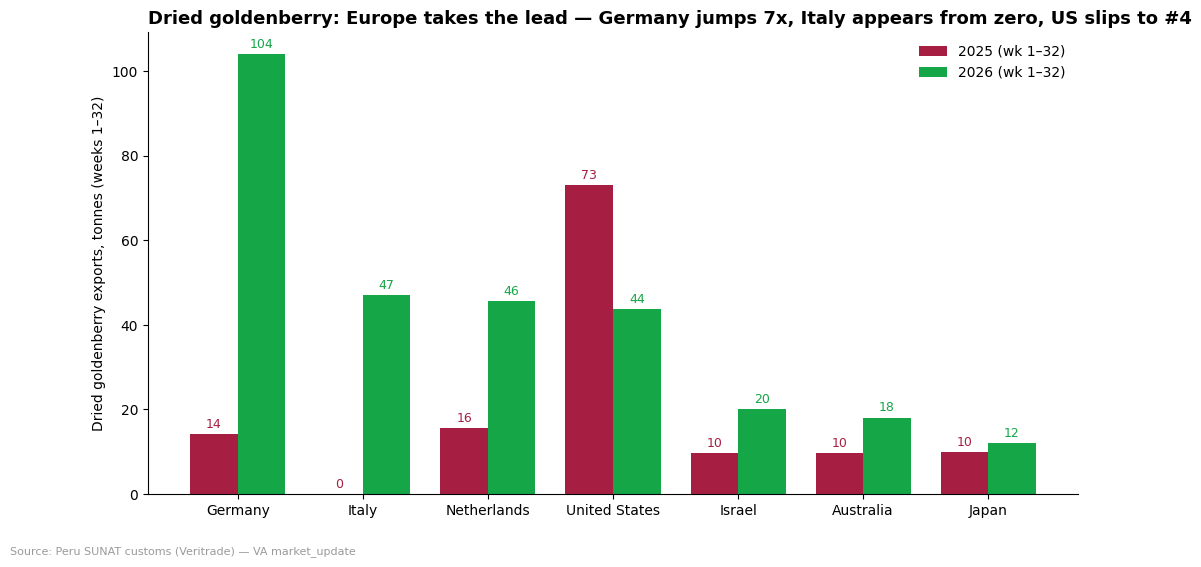
Peru's fresh goldenberry exports are up around 75% year on year through July, with the Netherlands and Canada absorbing nearly all of it, and fruit committed to fresh programs never reaches the dryers. Dried exports have surged as well, more than doubling year on year, with Germany jumping seven-fold to become the top destination. Peak collection in Cajamarca closed in June.
Pineapple: global supply tight, Peru well placed
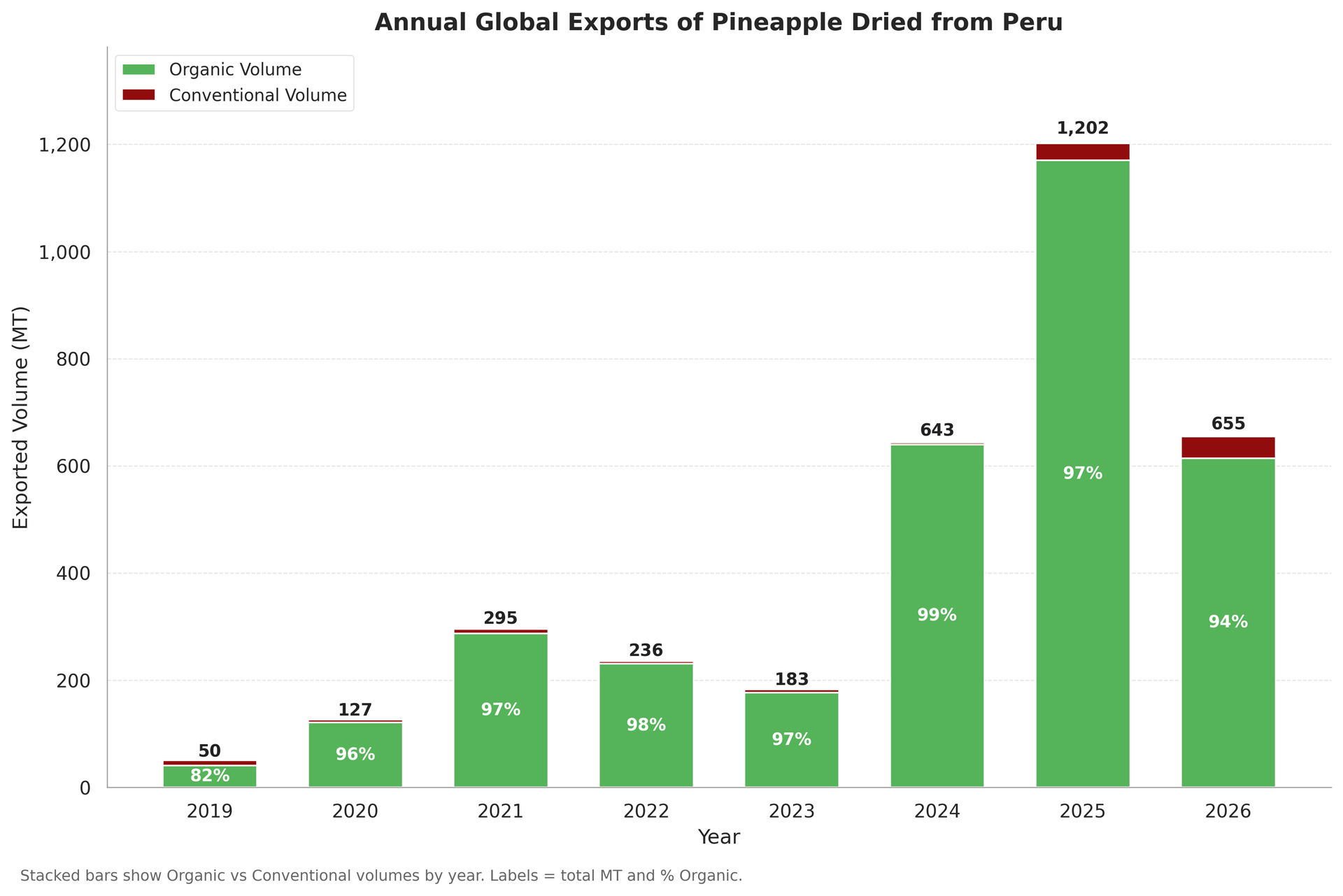
Production in Costa Rica, which accounts for roughly 80% of world pineapple exports, is running 15 to 20% below normal and prices are up about 30% year on year (Commodity Board), with the trade expecting a further squeeze from early September as El Niño affects the main producing regions. Peru's pineapple heartland in the central jungle sits outside the coastal zone El Niño hits, and Golden pineapple raw material actually cheapened in July ahead of the stronger September to November supply window.
Andean Grains
Quinoa: colored varieties flip to a premium
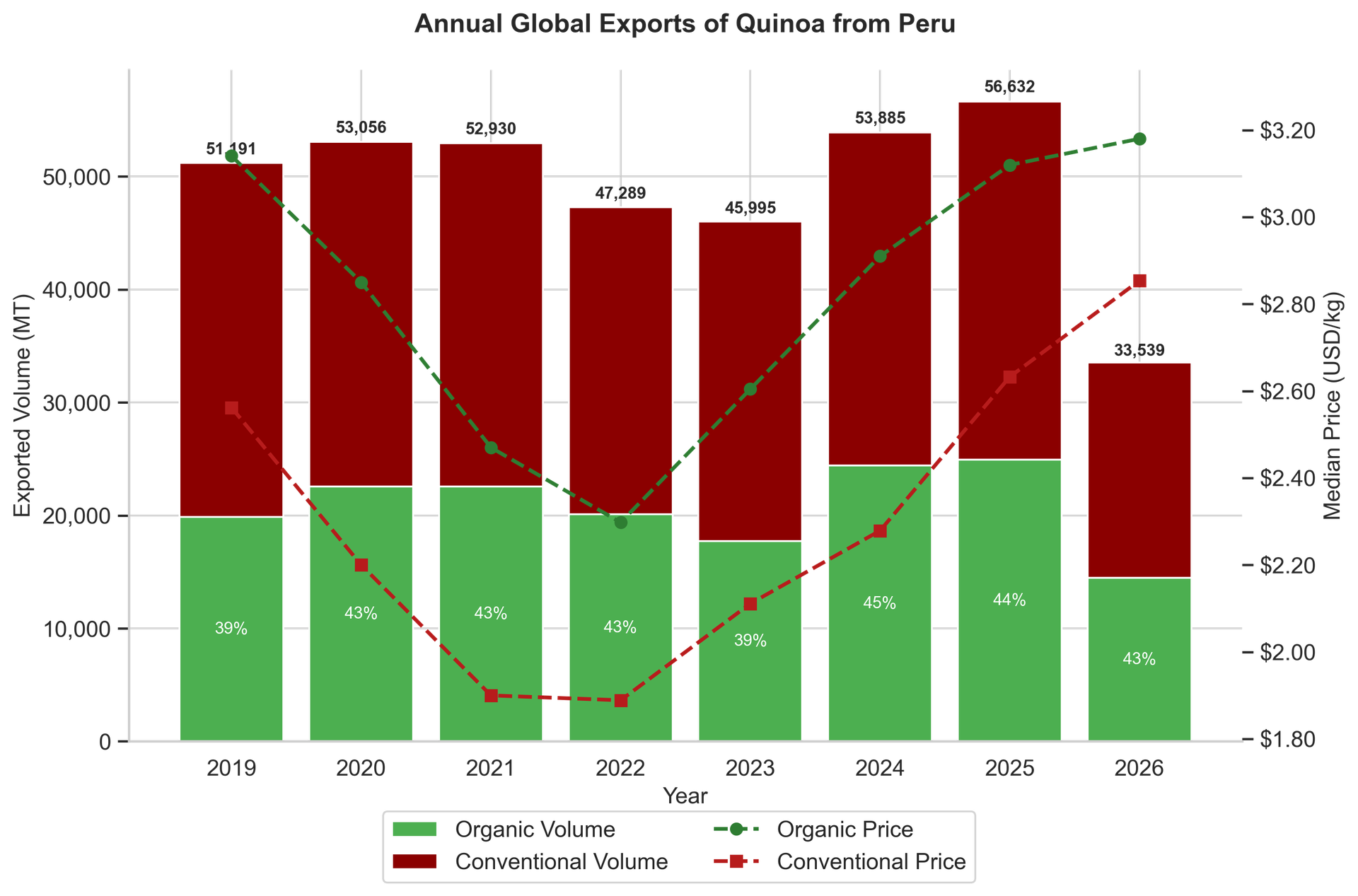
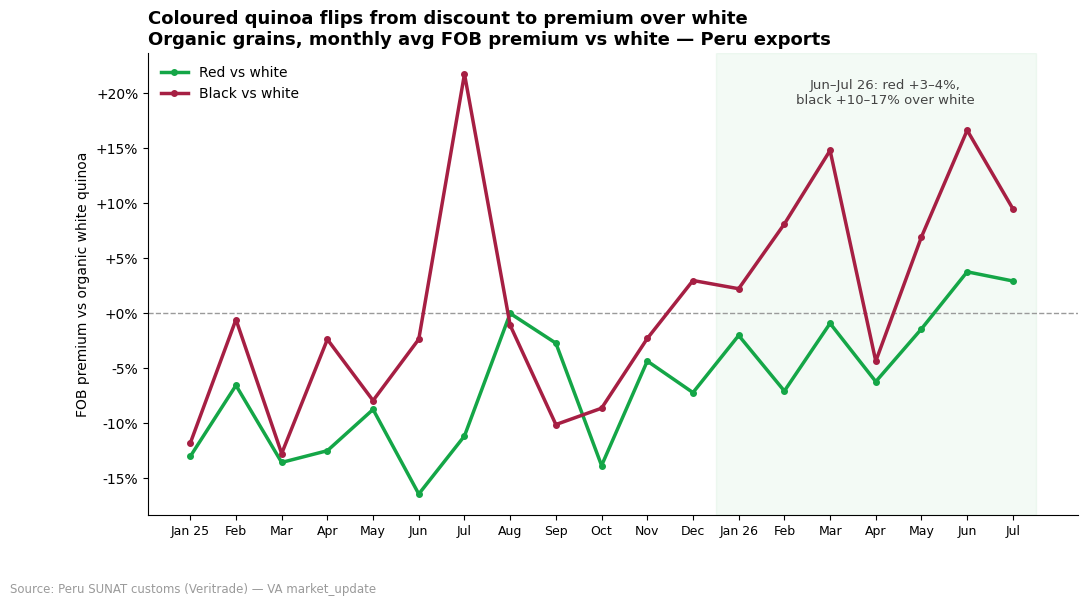
The 2026 harvest has closed in Ayacucho and Huancavelica with white quinoa trending up on low supply and red and black genuinely scarce. Nationally, colored quinoa has flipped from trading at a discount to white in 2025 to a clear premium by mid-2026, and Bolivian royal quinoa offers are up more than 25% year on year (Commodity Board). Peru's Q1 export prices already averaged US$2.89/kg, up 11% year on year (FreshFruit). We recommend covering colored quinoa needs early against the new crop; the next meaningful harvest window is Arequipa's smaller October campaign.
Amaranth and chia
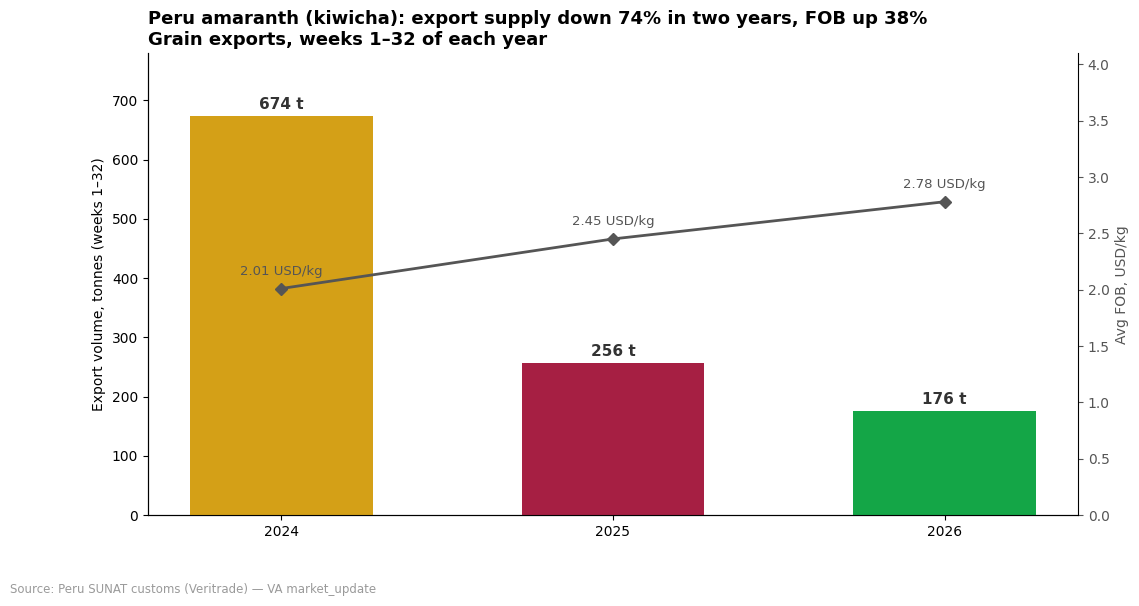
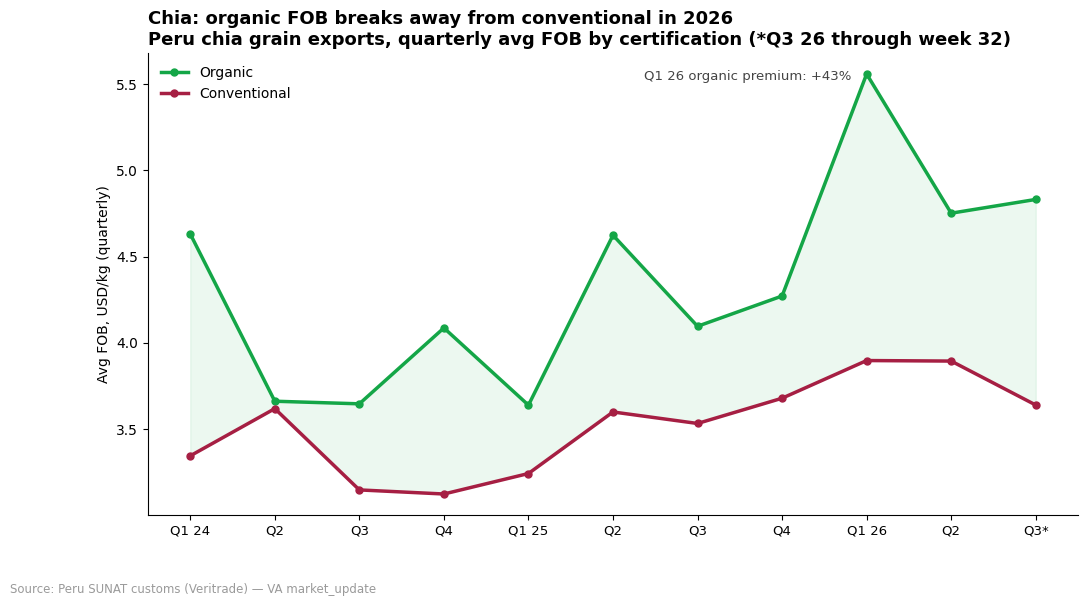
Peru's amaranth (kiwicha) export supply has contracted sharply, down about 74% versus two years ago while the national average FOB rose 38%, with Japan now absorbing roughly two thirds of the flow. In chia, Paraguay's larger new crop has brought conventional offers down around a quarter from spot, while the organic segment stays tight after compliance failures shrank certified supply, and organic FOB out of Peru has broken away from conventional this year.
What this means for buyers
Four practical takeaways from this month's data. First, on mango, start the dialogue early: real offers will only exist once the crop shows itself in late September or October, and in a year this short, being first in line for spec and volume matters more than price negotiation. Second, on cacao, the window of corrected origin prices may not survive the new West African season that starts September 1; we see a reasonable case for covering Q4 and Q1 needs now. Third, colored quinoa and maca are both supply-tightening stories where early commitments beat waiting. And fourth, organic across categories keeps gaining share even in a price-sensitive year, which supports planning organic programmes with certified origins.
If you would like to discuss any of these markets, or need pricing for our product range, please get in touch. We are happy to share the underlying data.
Methodology and sources
Peru export statistics are computed from SUNAT customs records (via Veritrade), updated weekly, through week 32 of 2026 unless noted. Global cocoa data comes from ICE futures, CFTC positioning reports, and ICCO grindings. Climate and campaign assessments draw on ENFEN and SENAMHI publications and our own field reports from the growing regions. Trade-press sources are linked inline. Charts show Peru-level aggregate data, not Villa Andina shipments. Nothing here is a price commitment; at origin, fruit and grain trade spot.